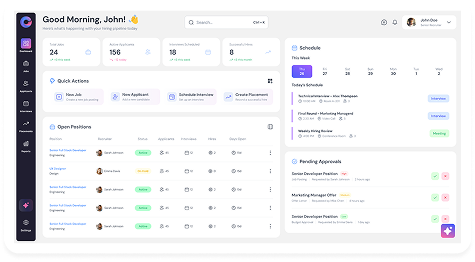

Analytics in recruitment refers to the ability to track, measure, and evaluate hiring data through detailed reports inside a recruiting platform. For modern TA teams, analytics turns guesswork into clarity. Instead of relying on intuition, recruiters can look at real numbers that explain what is working, what is slowing down the pipeline, and where improvements should be made.
Inside Oorwin AI, analytics is not just a dashboard. It is the backbone of smarter hiring. The platform pulls data from every touchpoint, analyzes patterns, and highlights bottlenecks so recruiters can improve speed, quality, and overall process efficiency.
When used well, analytics gives you visibility into your entire hiring lifecycle. It helps you understand candidate behavior, recruiter performance, funnel health, and source effectiveness. In other words, it shows you the truth behind your pipeline.
What Analytics Covers Inside Oorwin
Oorwin AI provides a wide range of recruitment reports that help teams make confident decisions without digging through spreadsheets.
Here are the most important areas analytics supports.
1. Pipeline and Funnel Metrics
Track each step of the hiring process. See where candidates drop off, how long each stage takes, and how quickly roles are moving.
2. Source Performance Reports
Identify which job boards, career pages, agencies, or referral channels bring the best candidates. This helps teams reduce spend and double down on channels that convert.
3. Recruiter Productivity Reports
Measure activities like submissions, interviews, offers, and hires. These insights help managers allocate work better and improve team efficiency.
4. Time-to-Hire and Time-to-Fill Data
Understand how long it takes to close roles and where delays occur.
5. Quality of Hire Indicators
Evaluate the success of hires based on performance, engagement, and retention signals captured in the system.
6. AI-Driven Insights
Oorwin uses AI to detect unusual patterns, flag delays, and recommend improvements automatically.
These analytics are built to help recruiters move faster, stay informed, and stay ahead.
Why Analytics Matters for Hiring Teams
Analytics becomes a competitive advantage when hiring markets are tight and speed is everything.
Better decisions
Teams stop relying on assumptions and start working with real data.
Higher efficiency
Bottlenecks become visible, making it easy to fix broken steps in the process.
Better candidate experience
Delays, communication gaps, and slow responses become measurable and correctable.
More predictable hiring
With data-driven visibility, leaders can plan headcount, budgets, and hiring timelines more accurately.
Improved performance tracking
Managers can evaluate team output and optimize workload distribution.
Without analytics, hiring becomes reactive. With analytics, it becomes strategic.
Analytics in Oorwin AI vs Basic Reporting
| Factor | Oorwin AI Analytics | Basic Reporting |
|---|---|---|
| Depth | Detailed and AI powered | Simple counts |
| Insights | Identifies issues and trends | Raw data only |
| Automation | Auto generated insights | Manual interpretation |
| Impact | Actionable improvements | Limited visibility |
| Audience | TA leaders, recruiters, executives | Recruiters only |
Oorwin focuses on clarity and decision making instead of just displaying numbers.
How Oorwin AI Elevates Analytics
Oorwin enhances analytics with intelligent automation and a clean data layer, making it easy for teams to understand what needs fixing.
Oorwin helps teams:
Spot issues early
The system highlights slow-moving roles, low-performing channels, or missing communication.
Optimize sourcing spend
By showing which sources actually convert.
Improve recruiter output
Performance insights eliminate blind spots.
Predict hiring timelines
Data-driven forecasts help leaders plan ahead.
Run compliance friendly, audit-ready reports
Every action is recorded and traceable for future reference.
Analytics becomes a living part of your daily workflow, not something you check once a month.
Final Thought
Analytics inside Oorwin AI is more than a dashboard. It is a decision engine that shows you what is working, what is slowing you down, and what you need to optimize. When teams understand their data, everything from sourcing to hiring becomes more predictable, more efficient, and more aligned with business goals.