Imagine steering a ship through fog. You know where you started, and you have a rough idea of your destination, but everything between those two points is a mystery. You’re navigating on instinct, hoping you don’t hit something you didn’t see coming.
That’s what hiring looks like for most organizations today.
A candidate submits an application. It vanishes into a black box. A recruiter picks it up, passes it along, drops a note in a spreadsheet. An interview happens. Feedback sits in someone’s inbox. Days pass. Weeks, sometimes. The candidate, left in silence, accepts another offer. The hiring manager wonders what happened. The recruiter doesn’t have a clear answer.
This isn’t a people problem. It’s a visibility problem.
End-to-end hiring visibility is the practice of tracking, measuring, and understanding every stage of the recruitment lifecycle from the moment a requisition opens to the moment a new hire walks through the door.
When organizations embrace full recruitment pipeline visibility, they don’t just hire faster. They hire smarter, build stronger teams, and create candidate experiences that become a competitive advantage in themselves.
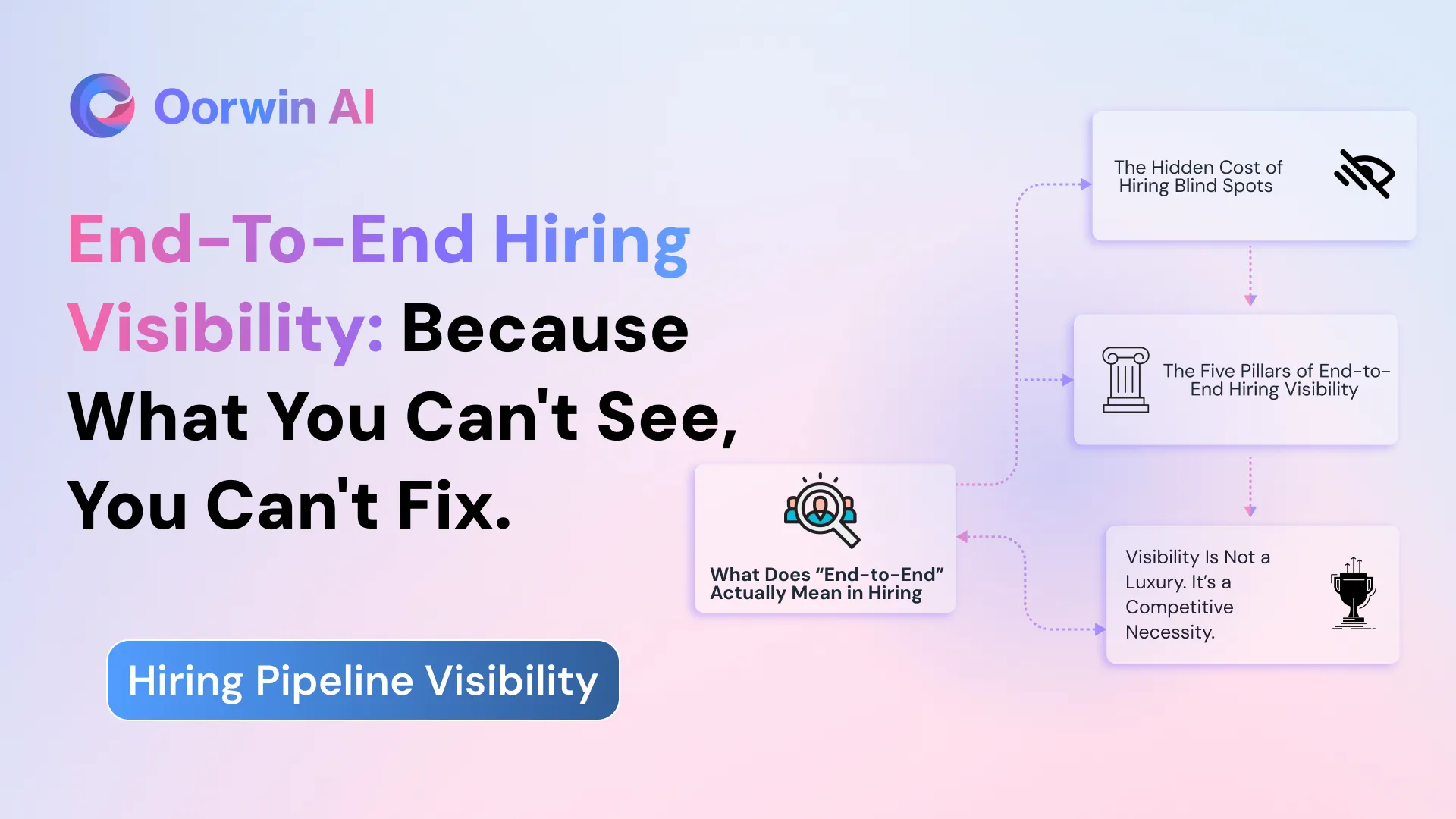
What Does “End-to-End” Actually Mean in Hiring?
The phrase “end-to-end” gets used loosely. But in the context of talent acquisition, it has a specific and powerful meaning: no stage is invisible, no handoff is a black hole, and no decision is made without context.
A true end-to-end recruitment process with full hiring process transparency covers:
- Requisition Management – When a role opens, who approved it, what the budget is, and what success looks like.
- Sourcing & Pipeline Building – Where candidates come from, which channels are performing, and how your talent pool is growing.
- Application & Screening – How quickly candidates move through initial review and where drop-off points are.
- Interview Coordination – How efficiently interviews are scheduled, how feedback is collected, and where delays occur.
- Offer Management – How long it takes from verbal offer to signed contract, and where candidates are lost in the final stretch.
- Onboarding Integration – How the recruitment experience connects to the employee’s first 90 days, and whether the expectations set during hiring are met in reality.
When all of these stages are visible in one connected system, hiring teams stop operating in silos. They start operating as a coordinated, data-driven engine.
The Hidden Cost of Hiring Blind Spots
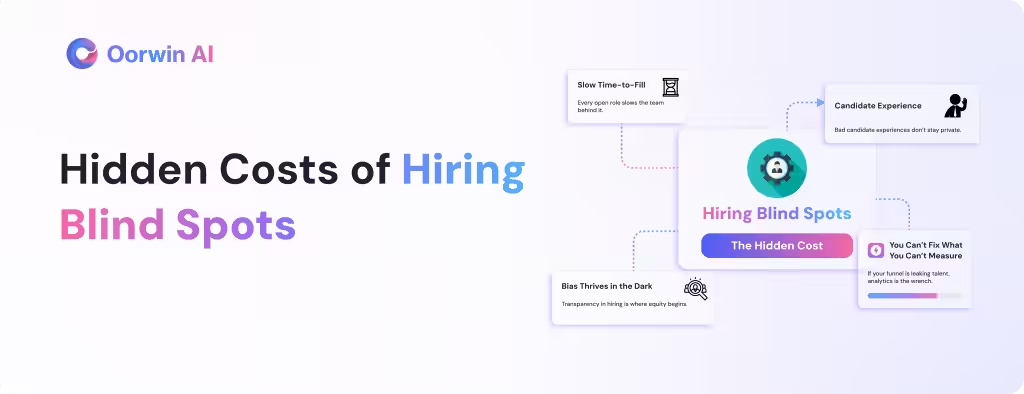
Blind spots in the hiring process are expensive, not just in the obvious ways like losing a great candidate to a competitor, but in ways that quietly compound over time and impact your bottom line.
1. Slow Time-to-Fill Drains Your Business
Every day a role sits open, your existing team absorbs the workload. Productivity dips. Morale follows. Projects get delayed. Organizations with better recruitment pipeline visibility consistently close roles faster, not because they work harder, but because they work without friction. Optimizing time-to-fill starts with knowing exactly where delays occur in real time.
2. Candidate Experience Defines Your Employer Brand
Today’s candidates talk. They leave Glassdoor reviews. They tell their networks. A candidate who goes three weeks without an update after a final-round interview doesn’t just walk away, they walk away with a story. Tracking candidate experience metrics at every touchpoint ensures your employer brand is protected at every stage of the funnel.
3. Bias Thrives in the Dark
When decisions are undocumented and processes are opaque, unconscious bias fills the gap. Without structured feedback loops and transparent evaluation criteria, hiring managers default to gut feel. End-to-end hiring visibility creates accountability. Accountability creates equity. Diversity hiring tracking becomes meaningful only when the data exists to support it.
4. You Can’t Fix What You Can’t Measure
If you don’t know where candidates are dropping out of your funnel, you can’t fix the leak. If you don’t know which sourcing channels deliver candidates who actually stay, you’re wasting budget. Hiring without recruitment analytics is budgeting without a spreadsheet. You might get lucky, but you’ll never be strategic.
The Five Pillars of End-to-End Hiring Visibility
Building a truly visible hiring process isn’t about adding more dashboards to your HR tech stack. It’s about connecting the right data points so they tell a coherent story. Here are the five pillars every talent acquisition team needs:
Pillar 1: Unified Data Architecture
Most organizations have data. The problem is it lives in fifteen different places. The ATS has application data. The HRIS has headcount data. The calendar tool has interview schedules. None of these systems talk to each other.
Full-cycle recruiting visibility starts with unification. When all your hiring data lives in one ecosystem or is meaningfully integrated, you can see the complete picture without manually stitching it together. This is the foundation everything else is built on.
Pillar 2: Real-Time Pipeline Tracking
Static weekly reports are a rearview mirror. By the time you’re reading what happened last Tuesday, the situation has already changed. A real-time recruiting dashboard gives hiring managers and recruiters a live view of where every candidate stands, what action is needed, and where bottlenecks are forming, before they become crises.
Pillar 3: Structured Feedback Loops
Interview feedback is one of the most critical and most chaotic parts of the hiring process. It arrives late. It’s inconsistent. It’s too vague to be useful.
Visibility requires structure: standardized scorecards, automated reminders, and a system that flags missing feedback before the next stage proceeds. When structured interview feedback is timely and consistent, decisions are faster, fairer, and better.
Pillar 4: Candidate Experience Metrics
The candidate’s journey is a data source, and most organizations are ignoring it. How long does your average candidate wait between application and first contact? What’s your offer acceptance rate, and what does a decline tell you? Organizations with true hiring process transparency treat candidate experience as a metric, not an afterthought.
Pillar 5: Predictive Analytics & Pattern Recognition
This is where visibility becomes foresight. When you have sufficient historical data in a single AI recruitment platform, machine learning can identify patterns humans miss. Which roles consistently take longer to fill, and why? Which sourcing channels produce the highest six-month retention? Predictive hiring analytics don’t replace recruiter judgment. They sharpen it.
End-to-End Visibility in Practice: Before vs. After
Let’s make this concrete. Here’s what a hiring process looks like with full recruitment pipeline visibility versus without it:
Without Visibility:
- A hiring manager submits a requisition. It takes four days to get approved because it landed in the wrong inbox.
- A recruiter sources candidates but has no idea which job board produced the best hires last quarter.
- A strong candidate goes three weeks without an interview because scheduling fell through the cracks.
- The offer goes out. The candidate declines. Nobody captures why. The process starts over.
With Visibility:
- Requisitions are auto-routed for approval, with SLA alerts if not actioned within 24 hours.
- Sourcing dashboards surface real-time channel performance, so recruiters double down on what’s working.
- Candidates receive automated, personalized updates at every stage. No one falls silent.
- When a candidate declines, the system captures the reason. Within weeks, offer acceptance rate improvement patterns emerge.
This isn’t a hypothetical future. It’s what organizations using integrated talent acquisition platforms are experiencing right now.
How Oorwin Powers End-to-End Hiring Visibility
Oorwin is built on a clear premise: the hiring journey should be as transparent as it is efficient. That means connecting every stage of recruitment into one AI-powered ecosystem, where data flows freely, bottlenecks surface automatically, and every decision is informed by insight.
AI-Driven Sourcing Intelligence
Oorwin’s AI doesn’t just match resumes to job descriptions. It learns which candidate profiles, sourcing channels, and outreach strategies produce the best outcomes for your specific organization continuously improving your recruitment pipeline visibility over time.
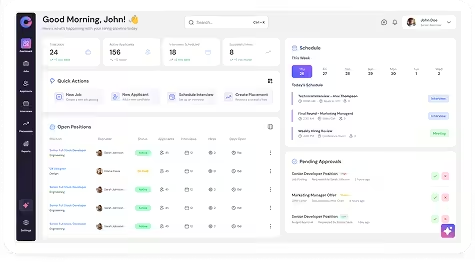
Live Pipeline Dashboards
Every recruiter, hiring manager, and HR leader gets a real-time recruiting dashboard, not a report from last week, but a live, accurate picture of exactly where every candidate stands and what needs to happen next.
Automated Candidate Engagement
Oorwin ensures no candidate is left in silence. Automated touchpoints keep candidates informed and engaged throughout the process, protecting your employer brand and directly improving offer acceptance rates.
Integrated Feedback & Collaboration
Structured interview feedback is captured, organized, and surfaced at the right time. Hiring teams collaborate without leaving the platform, eliminating the back-and-forth that kills momentum and extends time-to-fill.
Retention-Ready Data Handoff
The visibility doesn’t stop at the offer letter. Oorwin connects hiring data to onboarding and HR management so the context gathered during recruitment like skills, motivations, career goals, informs how you develop and retain that employee long-term. Hiring insight becomes the foundation of lasting engagement.
Visibility Is Not a Luxury. It’s a Competitive Necessity.
The organizations winning the war for talent aren’t necessarily the ones with the biggest budgets or the most recognizable brands. They’re the ones who have removed the fog from their hiring process.
They know where every candidate is. They know where their process breaks down. They know which investments are producing results. And because they know, they act, they don’t react.
End-to-end hiring visibility transforms talent acquisition from a reactive scramble into a strategic function. It makes every recruiter more effective, every hiring manager more empowered, and every candidate experience more intentional.
The question isn’t whether you can afford to invest in hiring visibility. It’s whether you can afford not to.
Ready to see your entire hiring journey with clarity? Discover how Oorwin’s AI-powered recruitment platform gives you the visibility to hire faster, smarter, and with confidence.