
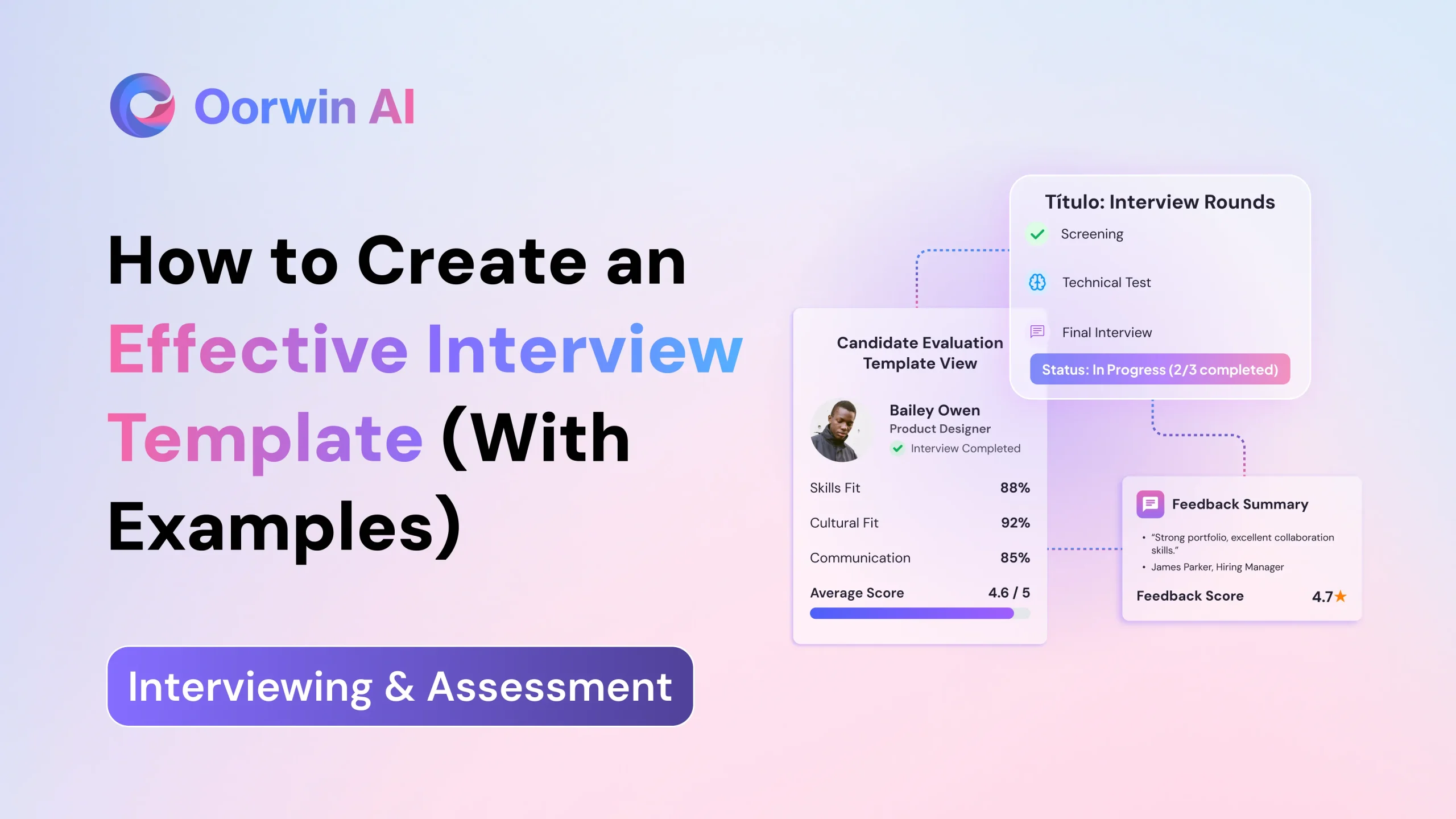
Introduction to Interview Templates
In today’s fast-paced corporate world, the recruitment process has become more streamlined and efficient than ever before. One of the tools that have played a pivotal role in this transformation is the “Interview Template.” An interview template not only ensures that the hiring process remains consistent across all candidates but also ensures that no critical information is missed during the interview. In this blog, we will delve deep into the world of interview templates, understanding their importance and the key components that make them so effective.
Key Components of an Interview Template
An effective interview template is more than just a set of questions. It’s a comprehensive document that guides the interviewer through the entire process, ensuring that all essential details are covered. Let’s explore the key components that every interview template should have:
Contact Information of Interviewee and Interviewer
- Interviewee Details: This includes the full name of the candidate, their phone number, email address, and any other relevant contact details. It helps the interviewer or the HR team to reach out to the candidate for any follow-ups or additional information.
- Interviewer Details: Just as it’s essential to have the candidate’s details, it’s equally important to have the interviewer’s contact information. This ensures that the candidate knows whom to reach out to in case of any queries or clarifications.
Interview Date, Time, and Location
- Date & Time: Clearly mentioning the interview’s date and time ensures clarity and communication. It helps both the interviewer and the interviewee to be prepared and punctual.
- Location: If the interview is in person, provide the complete address of the interview location, including any specific instructions or landmarks. Provide the platform details (like Zoom or Skype) and the meeting link for remote interviews.
Interview Format
- In-person: This is the traditional face-to-face interview where the candidate and the interviewer meet at a physical location.
- Remote: With the rise of technology and the current global scenario, remote interviews have become increasingly popular. This format uses video conferencing tools to conduct the interview.
- Phone: Sometimes, interviews are conducted over the phone, especially for the initial rounds. It’s a quick way to assess a candidate’s suitability before proceeding to more in-depth rounds.
Core Competencies or Skills Being Assessed
- Every role requires a specific set of skills or competencies. The interview template should clearly list these competencies. It could range from technical skills, soft skills, or even specific experiences relevant to the job role.
- By listing these out, the interviewer can structure their questions to assess these competencies effectively. It also gives the interviewee a clear idea of what is expected from them.
Step-by-Step Guide to Creating an Interview Template
Creating an interview template is an essential step in streamlining the hiring process and ensuring that each candidate is evaluated consistently and fairly. Here’s a step-by-step guide to help you craft an effective interview template:
Determine the Purpose of the Interview
- Objective Setting: Before diving into the specifics, understand why you’re conducting the interview. Is it for a job, internship, or freelance project?
- Role Clarity: Clearly define the role you’re hiring for. Understand the job responsibilities and the expectations associated with it.
Identify the Required Skills and Qualities
- Job Description Review: Go through the job description to identify the essential skills and qualities required for the role.
- Stakeholder Input: Discuss with team members or managers to understand what qualities they value in a candidate for the specific position.
Develop a List of Targeted Questions
- Relevance: Ensure that each question is relevant to the role and helps assess the candidate’s suitability.
- Diversity: Include a mix of questions evaluating technical knowledge and soft skills.
Organize Questions into Categories
- Behavioral: Questions that assess a candidate’s past behavior to predict their future behavior. E.g., “Tell me about a time when you faced a challenging situation at work and how you handled it.”
- Technical: Questions that evaluate the candidate’s technical knowledge and expertise.
- General: Questions about the candidate’s background, experience, and career goals.
Decide on Question Types
- Open-ended: Questions that allow candidates to provide detailed answers. E.g., “What interests you about this role?”
- Situational: Questions that place candidates in hypothetical situations to assess their problem-solving abilities. E.g., “What would you do if a team member is not contributing to a project?”
- Behavioral: Questions that ask candidates to reflect on past experiences. E.g., “Describe a situation where you had to meet a tight deadline.”
Create a Rating or Scoring System
- Scale: Decide on a scale (e.g., 1-5 or 1-10) to rate candidates’ answers.
- Criteria: Define what each number on the scale represents. For instance, 1 could be “unsatisfactory,” while 5 is “excellent.”
- Consistency: Ensure that all interviewers understand and use the rating system consistently.
Include Space for Interviewer Notes
- Feedback Area: Provide ample space after each question for interviewers to jot down notes, observations, and feedback.
- Summary Section: Include a section at the end of the template for the interviewer to summarize their overall impressions and recommendations.
Common interview template examples:
- Software Developer Interview Template
Contact Information:
- Interviewee: [Name, Email, Phone]
- Interviewer: [Name, Email, Phone]
Date & Time: [Insert Date and Time]
Location: [Insert Location or Video Conferencing Link]
Technical Questions:
- Describe your experience with [specific programming language, e.g., Python].
- How do you handle version control? Are you familiar with Git?
- Explain the concept of OOP and its main principles.
- How do you prioritize and manage multiple projects or tasks at once?
- Describe a time you had to debug a challenging problem.
Behavioral Questions:
- Describe a challenging project you worked on and how you overcame the challenges.
- How do you handle feedback on your code?
- Tell me about a time you disagreed with a team member. How did you resolve it?
- How do you stay updated with the latest technology trends?
Feedback Section: [Space for interviewer notes]
- Marketing Manager Interview Template
Contact Information:
- Interviewee: [Name, Email, Phone]
- Interviewer: [Name, Email, Phone]
Date & Time: [Insert Date and Time]
Location: [Insert Location or Video Conferencing Link]
Technical Questions:
- How do you measure the success of a marketing campaign?
- Are you familiar with SEO and SEM strategies?
- Describe a campaign you led that exceeded expectations. What strategies did you employ?
- How do you allocate a budget across different marketing channels?
- What tools do you use for tracking and analyzing campaign performance?
Behavioral Questions:
- Describe a time when a campaign didn’t go as planned. How did you handle it?
- How do you manage a team with diverse skill sets?
- Tell me about a time you had to pivot a campaign strategy midway. What prompted the change?
- How do you handle constructive criticism from team members or superiors?
Feedback Section: [Space for interviewer notes]
- HR Specialist Interview Template
Contact Information:
- Interviewee: [Name, Email, Phone]
- Interviewer: [Name, Email, Phone]
Date & Time: [Insert Date and Time]
Location: [Insert Location or Video Conferencing Link]
Technical Questions:
- How do you handle conflict resolution within a team?
- Describe your experience with employee onboarding processes.
- How do you ensure compliance with labor laws and regulations?
- What strategies do you employ for talent acquisition and retention?
- Describe a diversity and inclusion initiative you’ve implemented or been a part of.
Behavioral Questions:
- Tell me about a time you had to handle a difficult employee situation.
- How do you ensure fairness and consistency in the hiring process?
- Describe a situation where you had to mediate between two conflicting parties at work.
- How do you handle sensitive information and maintain confidentiality?
Feedback Section: [Space for interviewer notes]
Tips for Designing Effective Interview Questions
The right interview questions are crucial to gauging a candidate’s suitability for a role. Effective questions can provide deep insights into a candidate’s skills, experiences, and cultural fit. Here are some essential tips to help you design impactful interview questions:
Use the STAR Method for Behavioral Questions
- Situation: Encourage the candidate to describe a situation they faced in a previous role or project.
- Task: Ask them to explain the specific task or challenge they were responsible for within that situation.
- Action: Probe into the actions they took to address the task or challenge.
- Result: Finally, have them detail the outcomes or results of their actions. This method helps in understanding their problem-solving and decision-making processes.
Example: “Can you describe a situation where you had to handle a difficult client? What was the task at hand, the actions you took, and the final result?”
Avoid Leading or Biased Questions
- Neutral Wording: Ensure your questions don’t hint at a specific answer or sway the candidate’s response.
- Open-ended: Allow candidates the freedom to answer without feeling boxed into a particular response.
Example: Instead of asking, “You prefer working in teams, right?” ask, “How do you feel about working in teams?”
Ensure Questions are Relevant to the Role
- Role-specific: Tailor questions to assess skills and experiences directly related to the job position.
- Avoid Irrelevant Queries: Steer clear of questions that don’t provide insights into the candidate’s suitability for the role.
Example: For a software developer role, focus on coding skills and problem-solving rather than their expertise in unrelated areas like event management.
Keep Questions Concise and Clear
- Straightforward Wording: Avoid jargon or overly complex language.
- One Point at a Time: Don’t bundle multiple queries into one question; it can confuse candidates and dilute their responses.
Example: Instead of asking, “Can you tell me about your experiences with project management and also your views on team leadership?” split it into two separate questions.
Use a Mix of Technical and Behavioral Questions
- Technical Questions: Assess the candidate’s hard skills and technical expertise relevant to the job.
- Behavioral Questions: Gauge their soft skills, such as communication, teamwork, and problem-solving.
Example: For a marketing role, while you might ask about their experience with specific marketing tools (technical), you should also inquire about a time they resolved a conflict within their team (behavioral).
Common Mistakes to Avoid When Creating an Interview Template
Interviewing is a critical process in the hiring journey, and while an interview template can be a valuable tool, it’s essential to ensure it’s designed effectively. Here are some common pitfalls to avoid:
Overloading the Template with Too Many Questions
- Time Constraints: An interview typically lasts for a limited time. Overloading it with questions can rush the process, preventing deep dives into critical areas.
- Quality Over Quantity: Focus on key questions that provide the most insight rather than trying to cover every possible topic.
Focusing Solely on Technical Questions and Neglecting Soft Skills
- Balanced Assessment: While technical prowess is essential, soft skills like communication, teamwork, and adaptability are equally crucial.
- Holistic View: Ensure the template assesses the candidate’s technical expertise and interpersonal skills.
Asking Hypothetical Questions Unrelated to the Job
- Relevance is Key: Questions should be tailored to the role and responsibilities. Avoid generic hypotheticals that don’t provide actionable insights.
- Practical Scenarios: Instead of vague hypotheticals, use real-world scenarios that the candidate might encounter in the role.
Not Leaving Space for Interviewer Feedback:
- Valuable Insights: Interviewers often have observations or thoughts that don’t fit neatly into a scoring system. Providing space for these notes is crucial.
- Post-Interview Discussions: Detailed feedback can be invaluable when interviewers discuss candidates with hiring teams or when comparing multiple candidates.
Conclusion
Crafting an effective interview template goes beyond merely curating questions. It’s a strategic endeavor to ensure a well-rounded, pertinent, and thorough evaluation of every candidate. By sidestepping common pitfalls, hiring teams can foster a more seamless and discerning interview experience, culminating in superior hiring choices. For a holistic approach to sourcing, hiring, and onboarding talent, explore Oorwin’s integrated talent management platform. Dive into a world where technology meets talent, and elevate your recruitment game.
FAQ
Why are interview templates important?
Interview templates ensure consistency in the hiring process, helping interviewers assess candidates fairly and efficiently.
How to customize a template for different roles?
Customize by incorporating role-specific questions, emphasizing relevant skills, and adjusting the evaluation criteria based on the job’s requirements.
What is the ideal length for an interview template?
The ideal length varies, but it should comprehensively cover key areas without making the interview lengthy or rushed.