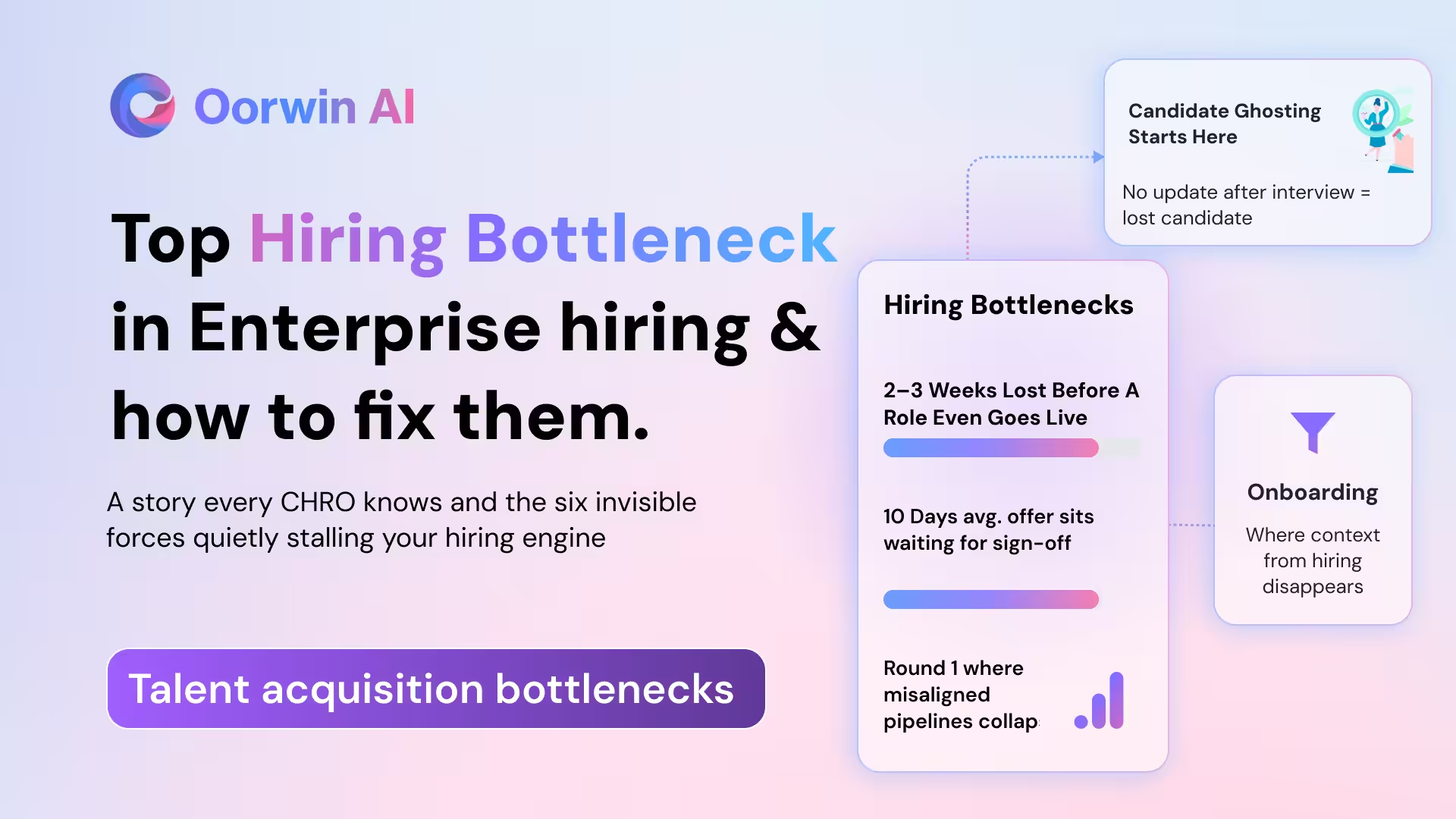
Hiring bottlenecks don’t announce themselves. They build quietly, one delayed approval, one missed update, one lost candidate at a time.
It’s a Tuesday morning, and Sarah, Chief Human Resources Officer at a fast-scaling enterprise, is already living proof of this. She opens her laptop to a familiar sight : seventeen unread emails, each a variation of the same theme. A hiring manager in Singapore asking why the engineering role still hasn’t been posted. A recruiter flagging that the finalist for the VP of Sales just accepted an offer elsewhere. A department head wanting to know when the “approved” headcount will actually translate into boots on the ground.
Sarah knows the answer to every one of those questions. And the answer, in every case, is the same: somewhere between the idea of hiring and the act of hiring, something got stuck.
She isn’t understaffed. Her team isn’t underqualified. Her company isn’t unattractive to talent. The problem is subtler and more stubborn than any of those things. The problem is friction- layered, compounding, and almost entirely invisible until it costs her someone she can’t afford to lose.
Sarah’s story isn’t unique. It plays out every day in enterprises across the world, in industries as different as financial services, healthcare, and technology. The hiring process, despite years of investment in HR technology and talent strategy, remains riddled with bottlenecks that slow everything down and quietly drain organizations of their best opportunities.
This blog is about those hiring bottlenecks- what they are, where they hide, and what it actually takes to eliminate them.
The biggest myth in enterprise recruitment is that hiring is slow because finding great candidates is hard. In most cases, the candidates exist. The process is what’s broken.
Where the Friction Lives: The Six Hiring Bottlenecks Behind the Chaos
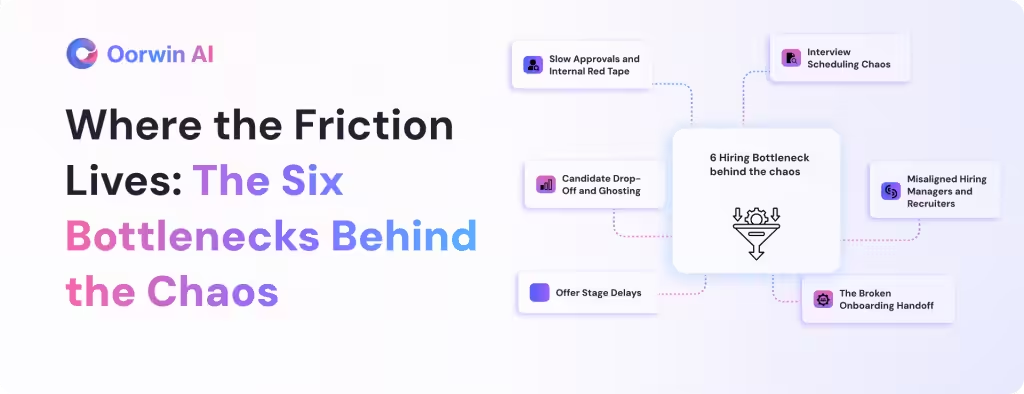
The emails in Sarah’s inbox aren’t random. Each one points back to a specific, structural break in the hiring process, a place where momentum dies, candidates disappear, and good intentions aren’t enough to keep things moving. These aren’t new problems. They’re the same six bottlenecks that slow enterprise recruitment down, again and again, across industries and geographies.
Here’s where they live and what it actually takes to fix them.
Bottleneck #1: Slow Approvals and Internal Red Tape
Before a single candidate is sourced, the role has to survive a gauntlet. Finance approves headcount. HR signs off on the grade. Legal weighs in on-the-job description. In a large enterprise, each approval lives in a different inbox, on a different timeline, owned by someone with a different set of priorities. By the time the role goes live, two to three weeks have already passed and the hiring manager who flagged the vacancy a month ago is already frustrated.
The fix isn’t to bypass governance. It’s to automate it. Configurable workflows with defined timelines and automatic escalations turn a chaotic email chain into a structured, accountable process. Approvals that once took weeks happen in hours, without any stakeholder losing visibility.
Bottleneck #2: Interview Scheduling Chaos
A candidate is ready on Wednesday. The hiring manager is travelling. The panel member is in back-to-back sessions. The next available slot is ten days away and in those ten days, three other companies have already moved that candidate to offer stage.
Self-scheduling fixes this. Candidates see real-time availability, book their own slot in minutes, and the back-and-forth disappears entirely.
Bottleneck #3: Candidate Drop-Off and Ghosting
Candidate ghosting feels personal. It’s almost always structural. Application submitted but no acknowledgment. Interview completed but no update. The candidate assumes rejection and accepts the faster offer that actually kept them informed.
The answer is automated, personalized communication built into the workflow itself. Every stage transition triggers a timely touchpoint. Candidates feel seen, drop-off falls, and your employer brand stays intact even with the people who don’t get the role.
Bottleneck #4: Misaligned Hiring Managers and Recruiters
Sarah has watched recruiters spend three weeks sourcing for a senior role, only to have the hiring manager reject every candidate in round one, not because they weren’t qualified, but because the intake conversation never surfaced what he actually wanted.
Structured intake frameworks backed by historical hiring data change this. When both sides work from the same evidence, the pipeline fills with people who actually belong there.
Bottleneck #5: Offer Stage Delays
Everything has gone right. The interviews were excellent. The candidate is enthusiastic. And then the offer sits in a queue because of compensation review, legal, executive sign-off, each reasonable in isolation, devastating in sequence.
Pre-approved compensation bands and parallel approval workflows bring offer turnaround from ten days to twenty-four hours. That window is often the difference between a hire and a loss.
Bottleneck #6: The Broken Onboarding Handoff
When the offer is signed, the recruitment team closes the file. And in that handoff, everything gathered during the process like what motivated this person, what they’re hoping to build, what they were promised, quietly disappears.
Integration fixes what intention can’t. When recruitment data flows directly into onboarding, new hires feel known from day one. And that early sense of belonging is what turns a good hire into a long-term one.
Fixing the Friction: How Oorwin Connects the Dots
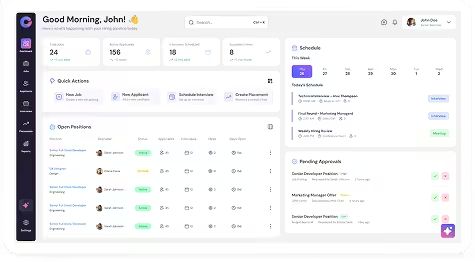
What Sarah needed and what every enterprise talent leader navigating these same bottlenecks needs isn’t another point solution for one part of the problem. It’s a platform that sees the entire hiring journey as a connected system, where a delay in one stage is visible before it cascades into the next.
Oorwin was built for exactly this. By unifying recruitment, HR operations, and talent management into one AI-powered ecosystem, Oorwin gives enterprise hiring teams the infrastructure to move fast without cutting corners.
Here’s how Oorwin directly addresses each one of these bottlenecks:
Automated Approval Workflows
Requisitions, offers, and key hiring decisions route through configurable workflows with built-in SLA alerts. Stakeholders are notified automatically. Delays are flagged before they compound. The governance stays intact; the friction disappears.
Intelligent Candidate Matching & Pipeline Visibility
Oorwin’s AI continuously learns what great looks like for your specific organization — surfacing the right candidates faster and giving recruiters and hiring managers a shared, data-backed language for evaluating talent. Misalignment becomes far less likely when both sides are working from the same evidence.
Automated Candidate Communication
Every stage transition triggers a personalized, timely touchpoint. Candidates are never left in silence. Drop-off rates fall, employer brand is protected, and the experience of being a candidate in your process becomes a competitive advantage rather than a liability.
Integrated Onboarding Handoff
The context built during recruitment doesn’t disappear at the offer stage. It travels with the candidate into onboarding, informing how they’re welcomed, developed, and retained. The hire doesn’t end at the signature. With Oorwin, it’s just the beginning.
Interview Reminders & Automated Scheduling
Oorwin eliminates scheduling chaos before it starts. Automated interview reminders keep candidates and interviewers aligned, while self-scheduling links let candidates book their own slots in real time. No back-and-forth. No missed interviews. No lost candidates to a competitor who simply moved faster.
The Hiring Bottlenecks Are Fixable. The Question Is Whether You’re Ready to Fix Them.
Sarah closed her laptop that Tuesday morning with a clearer sense of what she needed. Not more recruiters. Not a bigger job board budget. Not another engagement survey. She needed the friction gone.
The bottlenecks in enterprise recruitment aren’t inevitable. They’re structural. They’re the accumulated result of processes built for control rather than speed, tools that don’t talk to each other, and handoffs that lose context every time they happen.
Every one of them is fixable. And every one of them, left unfixed, costs you more than the investment to solve it in time, in talent, and in the quiet erosion of trust that happens when great people watch a great company struggle to hire.
The best talent acquisition strategy in the world means nothing if the process underneath it is designed to slow you down. Fix the process. The talent will follow.
Ready to eliminate the bottlenecks in your enterprise hiring process? See how Oorwin helps talent leaders like Sarah build a recruitment engine that’s fast, fair, and built to scale.