
Finding the right candidates for your organization can be a challenging endeavor. Traditional hiring methods that rely solely on resumes and interviews often fail to provide a comprehensive understanding of a candidate’s potential and suitability for a role. This is where behavioral assessments emerge as a game-changer in the recruitment process. By delving into a candidate’s behavior, values, and problem-solving abilities, behavioral assessments offer valuable insights that go beyond technical skills, helping employers make informed and successful hiring decisions.
What Is a Behavioral Assessment?
A behavioral assessment is a systematic approach employers use to evaluate a candidate’s behavioral traits and tendencies. Unlike traditional interviews focusing on qualifications and skills, a behavioral assessment delves into a candidate’s personality, values, problem-solving abilities, and interpersonal skills. By examining behavior in specific situations, employers gain deeper insights into how a candidate will perform on the job and fit within the company culture.
Types of Behavioral Assessments:
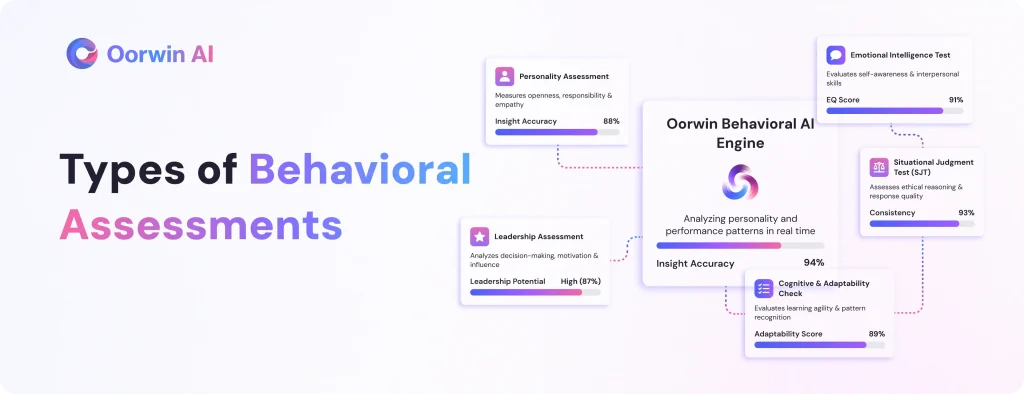
Various types of behavioral assessments are available to aid in the hiring process. Some common examples include:
- Personality Tests: These assessments evaluate a candidate’s character traits, preferences, and work style. They help recruiters understand if the candidate’s personality aligns with the job requirements and the team dynamics.
- Emotional Intelligence (EI) Tests: EI assessments assess a candidate’s ability to recognize and manage emotions in themselves and others. High emotional intelligence is often associated with strong leadership and teamwork skills.
- Cognitive Ability Tests: These assessments gauge a candidate’s problem-solving, critical thinking, and decision-making capabilities. They provide insights into a candidate’s intellectual capacity to handle complex tasks.
- Integrity Tests: Integrity assessments aim to identify honest, trustworthy individuals with a strong sense of ethics. These tests are particularly essential for positions that require handling sensitive information or high levels of responsibility.
What Behavioral Assessments Reveal:
Behavioral assessments comprehensively understand a candidate’s potential and suitability for a role. Some key insights they provide include:
- Workplace Behavior: How the candidate responds to challenges, handles stress, and interacts with colleagues.
- Motivation and Drive: What drives the candidate to excel in their work, and how do they deal with setbacks.
- Leadership Potential: Whether the candidate possesses leadership qualities, regardless of the position they are applying for.
- Conflict Resolution Skills: How the candidate approaches and resolves conflicts in professional settings.
- Adaptability: How well the candidate can adjust to changes and new situations.
Techniques for Assessing Candidate Fit:
To make the most of behavioral assessments, recruiters can employ the following techniques:
- Creating Meaningful Behavioral Interview Questions: Crafting insightful questions that prompt candidates to share real-life examples of their behavior in past situations is crucial in uncovering their true abilities and character.
- Utilizing the STAR Framework for Structuring Answers: The STAR (Situation, Task, Action, Result) framework helps candidates structure their responses effectively, providing clear and concise insights into their behavioral competencies.
- Constructing Probing and Follow-up Inquiries: Follow-up questions can dig deeper into specific responses, allowing recruiters to gauge the candidate’s thought process and the consistency of their behavior.
- Evaluating Candidate Compatibility: Comparing a candidate’s behavioral traits with the company’s values and culture is essential to ensure they will fit seamlessly into the organization.
- Documenting and Comparing Responses: Taking detailed notes during the assessment process enables recruiters to compare candidates objectively and make data-driven hiring decisions.
Benefits of Using a Behavioral Assessment in Recruiting:
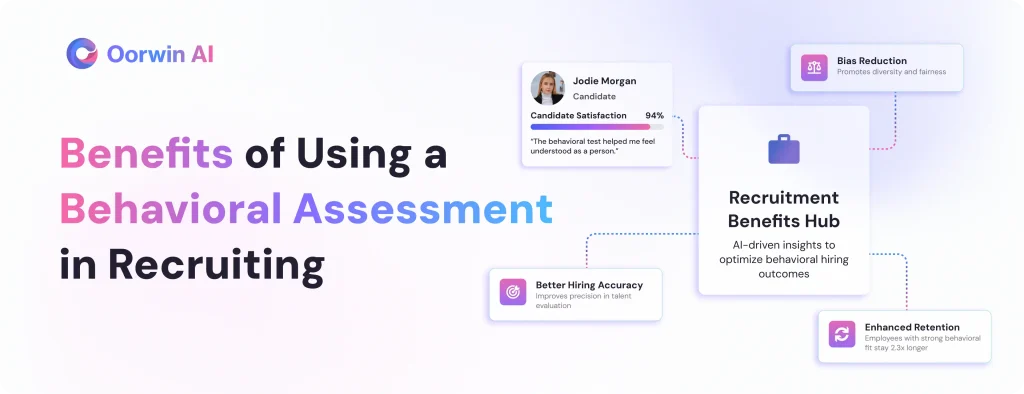
Integrating behavioral assessments into the recruitment process offers several advantages, including:
- Optimizing the Recruitment Procedure: Behavioral assessments streamline the selection process by focusing on crucial factors determining a candidate’s success in a particular role.
- Selecting Candidates Based on Performance: Past behavior is a strong indicator of future performance. By assessing behavior, employers can identify candidates more likely to excel.
- Utilizing Data-Driven Decisions: Behavioral assessments provide quantifiable data that aids in making objective and well-informed hiring decisions.
- Enhancing Return on Investment (ROI): Hiring candidates whose behavior aligns with the company’s values and culture contributes to higher employee satisfaction and reduced turnover rates.
- Providing Candidates With a Job Preview: By including behavioral assessments in the recruitment process, candidates better understand the company’s expectations and work environment.
In conclusion, incorporating behavioral assessments into the hiring process empowers organizations to make more accurate and successful hiring decisions. These assessments go beyond traditional measures and unlock the power of understanding a candidate’s behavior, thereby paving the way for unlocking talent and building high-performing teams.
FAQ
Why Do Hiring Teams Use Behavioral Assessments?
Hiring teams use behavioral assessments to gain deeper insights into a candidate’s personality, behavior, and soft skills, which traditional methods often overlook. By understanding how candidates react to situations, handle challenges, and interact with others, employers can make more informed decisions, leading to better job fit and reduced turnover.
What Is a Behavioral Assessment Based on Merit?
A behavioral assessment based on merit evaluates a candidate’s behavior, attitudes, and skills solely on their demonstrated abilities and performance. It focuses on objective criteria and avoids bias, enabling employers to select candidates based on their actual capabilities rather than subjective factors.
What Is a Behavioral Assessment & How Does It Work?
A behavioral assessment is a systematic evaluation of a candidate’s behavior, personality traits, and interpersonal skills. It involves various tests and questionnaires to understand how the candidate handles different situations. The assessment helps employers predict a candidate’s potential job performance and compatibility with the company culture.