
Gross margin in the context of staffing firms refers to the percentage of revenue retained after covering the direct costs associated with placing candidates, such as wages, benefits, and payroll taxes. It is a key metric that reflects the profitability of placements and operational efficiency.
In simple terms, gross margin shows how much profit a staffing firm makes from its placements after paying the candidates.
Why Gross Margin Matters for Staffing Firms
Gross margin is critical for staffing firms because it:
- Measures the profitability of placements and contracts.
- Helps identify high-margin clients, roles, or industries.
- Guides pricing strategies to ensure sustainable profits.
- Provides insights into cost management and operational efficiency.
- Enables better financial planning and decision-making.
A higher margin indicates that the firm is effectively managing costs and pricing its services competitively.
How to Calculate Gross Margin for Staffing Firms
Formula:
Gross Margin (%) = [(Bill Rate – Pay Rate) ÷ Bill Rate] × 100
Where:
- Bill Rate is the amount charged to the client for the candidate’s services.
- Pay Rate is the total cost of paying the candidate, including wages, benefits, and payroll taxes.
Example Calculation
If a staffing firm charges a client $50 per hour (Bill Rate) and pays the candidate $35 per hour (Pay Rate):
- Gross Margin = [($50 – $35) ÷ $50] × 100 = 30%
This means the staffing firm retains 30% of the revenue as gross profit after covering the candidate’s costs.
Gross Margin in Staffing Platforms
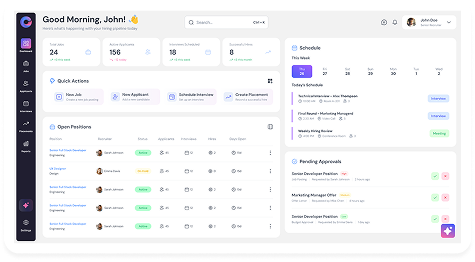
Modern staffing platforms help firms track billing and pay rates across placements, giving leaders better visibility into gross margin performance. This allows staffing firms to monitor profitability trends, compare client engagements, and make informed pricing decisions.