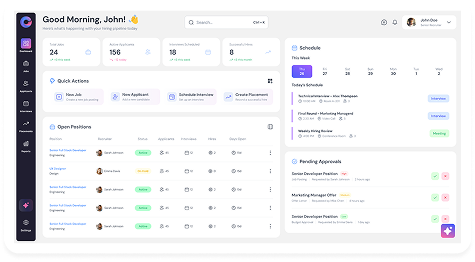

Pipeline Velocity refers to how quickly candidates move through the recruitment pipeline from sourcing and screening to interviews, offers, and placement. It measures the speed and efficiency of the hiring process.
Why Pipeline Velocity Matters
Slow-moving pipelines lead to delayed hires and lost candidates. Pipeline velocity matters because it helps recruiters:
- Identify bottlenecks in the hiring process
- Reduce time-to-hire
- Keep candidates engaged and responsive
- Improve overall hiring efficiency
A healthy pipeline velocity indicates that candidates are progressing smoothly without unnecessary delays.
How Pipeline Velocity Works
Pipeline velocity is typically assessed by tracking:
- Time spent at each hiring stage
- Candidate drop-offs between stages
- Overall time from sourcing to hire
By monitoring these metrics, recruiters can understand where the process slows down and take action to improve flow.
Pipeline Velocity in Recruitment Platforms
Recruitment platforms use pipeline velocity insights to help teams optimize hiring workflows and decision-making.
In Oorwin, pipeline velocity helps recruiters track candidate movement across stages, spot delays early, and maintain a faster, more predictable hiring process.