
Source effectiveness is a recruiting metric that measures how well candidate sourcing channels like job boards, LinkedIn, employee referrals, career portals, and others, delivers qualified candidates, successful placements, and hiring ROI.
It answers the question every recruiter and HR leader actually cares about: Which channels are worth our time and budget?
In staffing and recruiting, source effectiveness isn’t one number. It’s a combination of three signals working together, quality of candidates produced, conversion rate through the pipeline, and cost incurred to get there.
Why Source Effectiveness Matters
Most recruiting teams spread effort across 6–10 sourcing channels simultaneously. Without tracking source effectiveness, that effort is guesswork.
For staffing firms operating across India and the US, the stakes are higher. Client SLAs are tight, job orders are time-bound, and every wasted sourcing dollar eats directly into placement margin.
Source effectiveness data helps HR leaders and recruiters:
- Stop investing in channels that generate volume but not placements.
- Double down on sources with the highest submittal-to-hire conversion.
- Justify sourcing spend to clients and leadership with hard evidence.
- Reduce cost-per-hire over time through smarter channel allocation.
Tracking it isn’t optional for high-performing teams. It’s foundational.
Key Components of Source Effectiveness
1. Source Quality
The percentage of candidates from a given channel who clear the initial screening and move forward in the pipeline. A high volume of applicants with low pass-through rates signals poor source quality.
2. Source-to-Placement Rate
Of all candidates sourced from a channel, how many resulted in an actual placement? This is the truest measure of a source’s end-to-end effectiveness.
3. Cost Per Source
Total spend on a channel (job board subscriptions, sponsored posts, agency fees) divided by the number of placements it produced. Reveals actual ROI, not just activity.
4. Time-to-Fill by Source
Channels that consistently produce faster hires are more valuable for urgent, time-bound job orders — a critical factor in staffing.
5. Candidate Pipeline Contribution
What share of your active pipeline originates from each source? This shows reliance and risk — if 80% of your pipeline is one channel, that’s a vulnerability.
How Source Effectiveness Is Calculated
There’s no single formula, but a standard approach ties three data points together:
Source Effectiveness Score = (Placements from Source ÷ Total Applicants from Source) × (1 ÷ Cost Per Placement from Source)
Teams often track this per role type, per geography, and per client vertical, because the best source for an IT staffing firm in Hyderabad may differ significantly from one serving healthcare clients in the US.
Common Sourcing Channels Tracked
- Job Boards: Indeed, Monster, Dice, Naukri
- Professional Networks: LinkedIn, GitHub
- Internal Database / ATS: Existing candidate pool
- Employee & Client Referrals
- Career Portal: Firm’s own branded job page
- Social Media Campaigns
- Recruitment Community Platforms
Each channel has different cost structures, reach profiles, and conversion behaviors. Effective sourcing strategy is about knowing which channel to activate for which role, not spraying all of them equally.
Source Effectiveness in Oorwin
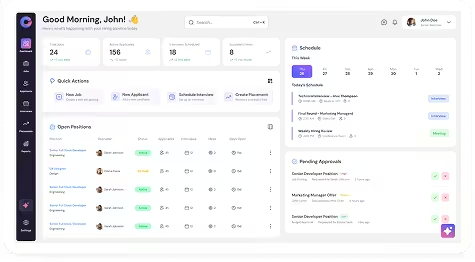
Oorwin tracks source effectiveness natively across your entire hiring pipeline, so recruiters and HR leaders don’t have to stitch together spreadsheets to get the picture.
- AI-Powered Sourcing Recommendations: Oorwin’s Talent AI analyzes historical sourcing data and recommends which channels are most likely to yield placements for a given role, skill set, and location, before a recruiter even begins sourcing.
- Job Board Integrations: Oorwin connects with 160+ platforms including Indeed, LinkedIn, Dice, and Naukri. Source tags are automatically applied to every candidate who enters the system, so attribution is clean from day one.
- Automated Pipeline Reporting: Recruiters and managers get automated reports showing candidate volume, qualification rates, and placement outcomes segmented by source, no manual tagging or data pulling required.
By centralizing sourcing data in one platform, Oorwin gives staffing firms the clarity to move budget from underperforming channels to the ones that consistently close.